Where the trees came from
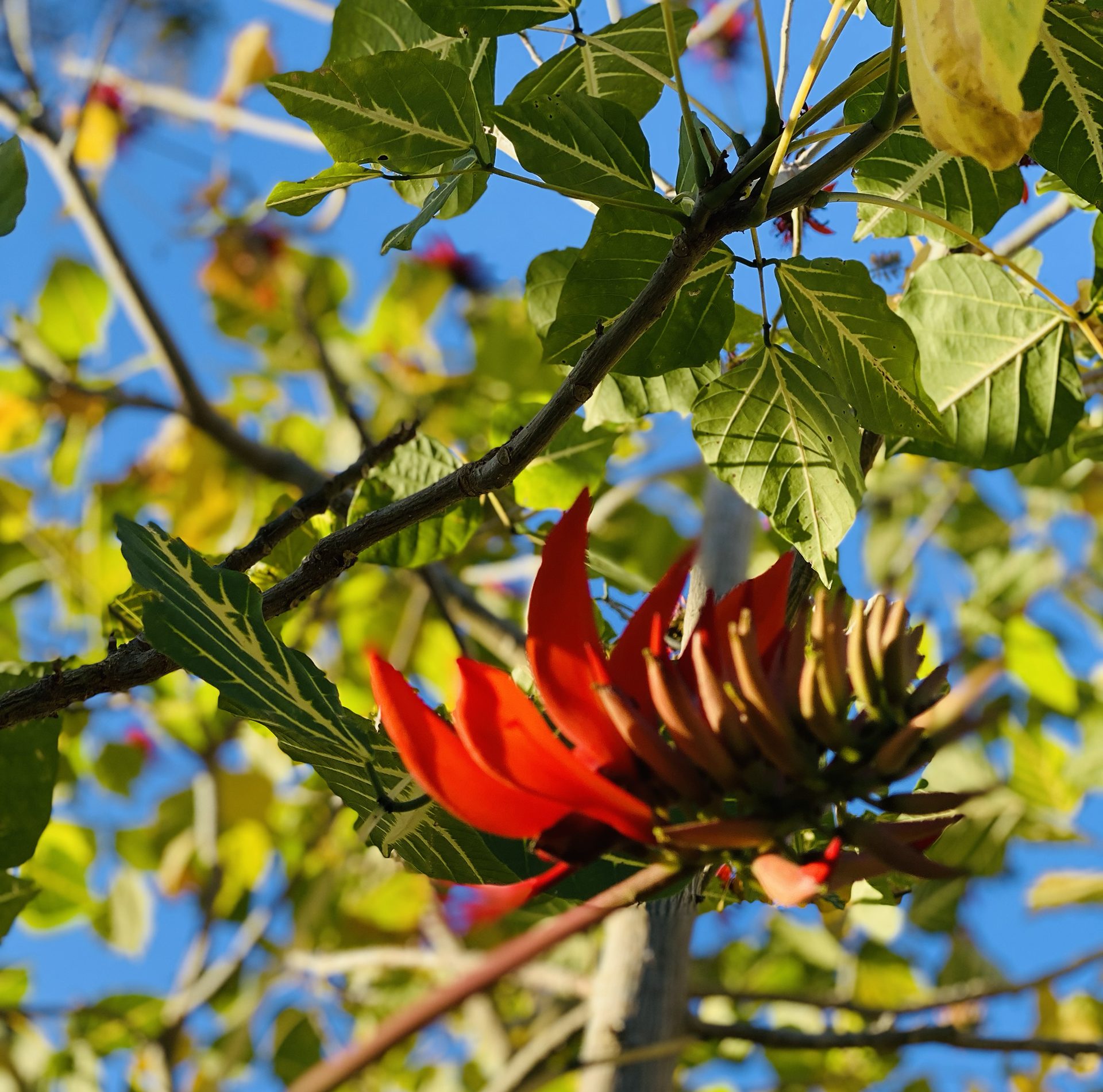
The 202 species growing on this estate did not come from one place. They were gathered from India, Southeast Asia, tropical Africa, the Pacific and the Americas, and planted together on a hillside in Guanacaste — where, twelve years on, most of them behave as though they had always been there.
The Origins page maps this continent by continent. This is what it shows.
Why do trees from four continents grow together here?
Because they share a climate rather than a homeland.
Nosara sits at ten degrees north with a hot, humid rainy season and a hard dry one. So does a wide belt of the tropics. A tree from Kerala, one from Java and one from West Africa can be strangers to each other and still want precisely the same year.
What they will not tolerate is frost, standing water, or a dry season with no relief — which is why establishing them took planting at the start of the rains and water through the rainless months.
Which are the ones that surprise people?
The baobab (Adansonia), unmistakable and African, growing on a Costa Rican slope. The banyan (Ficus benghalensis), the strangler fig of Indian temple courtyards. The Indian coral tree (Erythrina variegata), which flowers scarlet on bare branches. Ylang-ylang (Cananga odorata) from Southeast Asia, whose scent arrives before you see the tree.
Then the Asian fruit: rambutan, star fruit, mangosteen, miracle fruit from West Africa — all in the orchard.
What is actually native?
A real proportion, and it matters more than the exotics.
The Guanacaste dry forest has its own remarkable trees, and the estate carries them: the guanacaste tree itself (Enterolobium cyclocarpum), Costa Rica’s national tree and the province’s namesake; cortez amarillo and the pink roble de sabana, which flower on bare wood at the end of the dry season; poro-poro; nance; aceituno.
These are the species a restored dry forest is supposed to contain, and they are the reason the birds and the howler monkeys treat the property as forest rather than as a garden.
Is a mixed collection good for the land?
It depends what you are measuring.
For habitat value, native species do the most work — the local birds and insects evolved alongside them. For food, shade and soil recovery, a mixed planting establishes faster and gives more back sooner. This estate does both: a native dry-forest backbone with a fruit collection and an ornamental layer through it.
The register records origin per species, so anyone can see the balance rather than take our word for it.
How were the origins determined?
From botanical sources — accepted names first, then native range from the standard references. Where a species could not be matched with confidence, the register says so instead of guessing. Eleven records remain unmatched, and a number carry a stated confidence level.
That honesty is deliberate. A catalogue that quietly rounds up is worth less than one that flags its own uncertainty.
The short version
The Sanctuary Estate’s 202 species come from India, Southeast Asia, tropical Africa, the Pacific and the Americas, alongside a native Guanacaste dry-forest backbone including the guanacaste tree, cortez amarillo, roble de sabana and nance. They coexist because they share a latitude and a seasonal rhythm rather than an origin. Every species page records its native range at gardens.thesanctuaryestate.com.
See the gardens, or arrange a private viewing.
Related reading
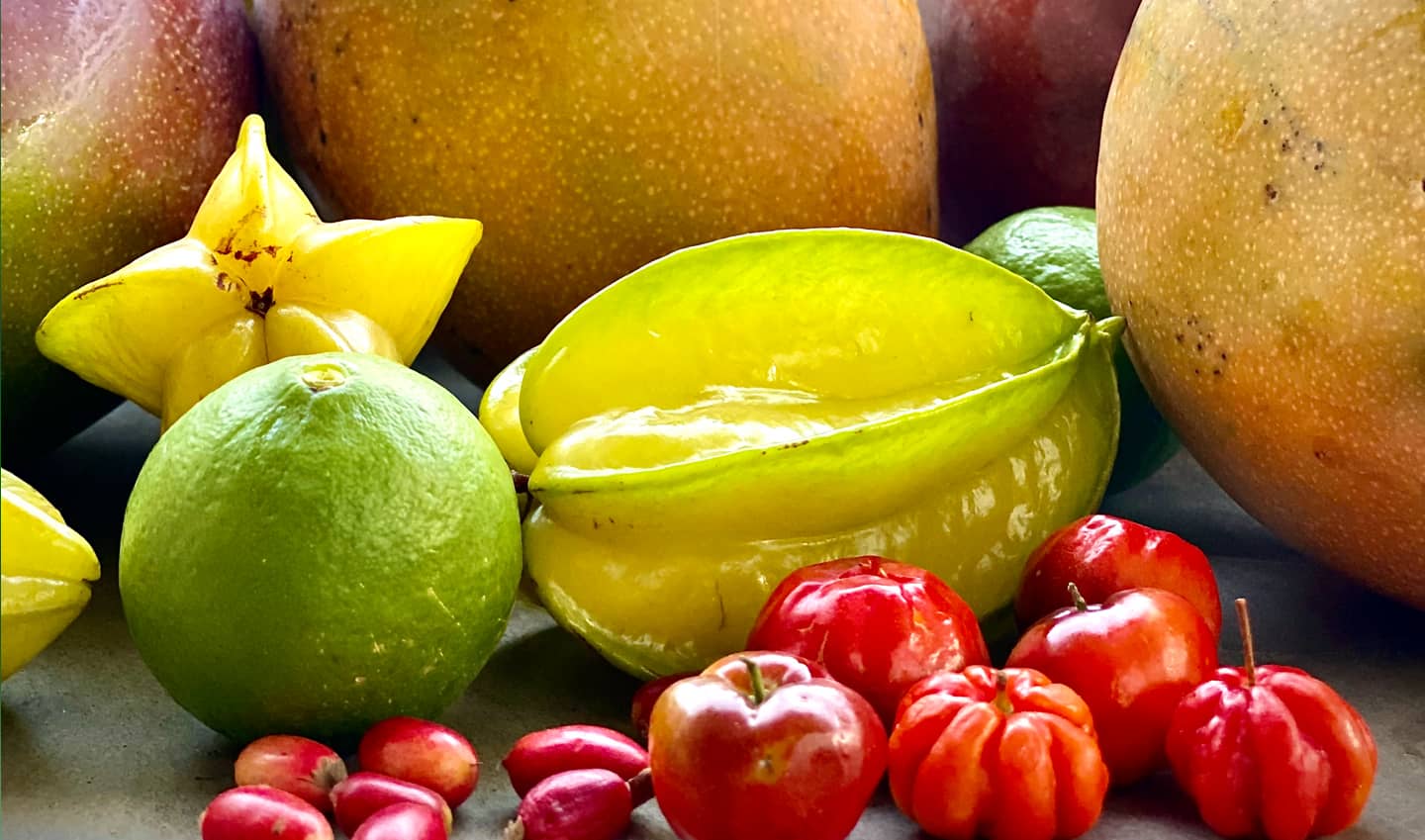
The orchard, variety by variety
Over 100 fruit trees across 50 varieties of fruit grow on this Nosara estate — rambutan, cacao, soursop, star apple, miracle fruit. What is planted, and what it tells you about the soil.
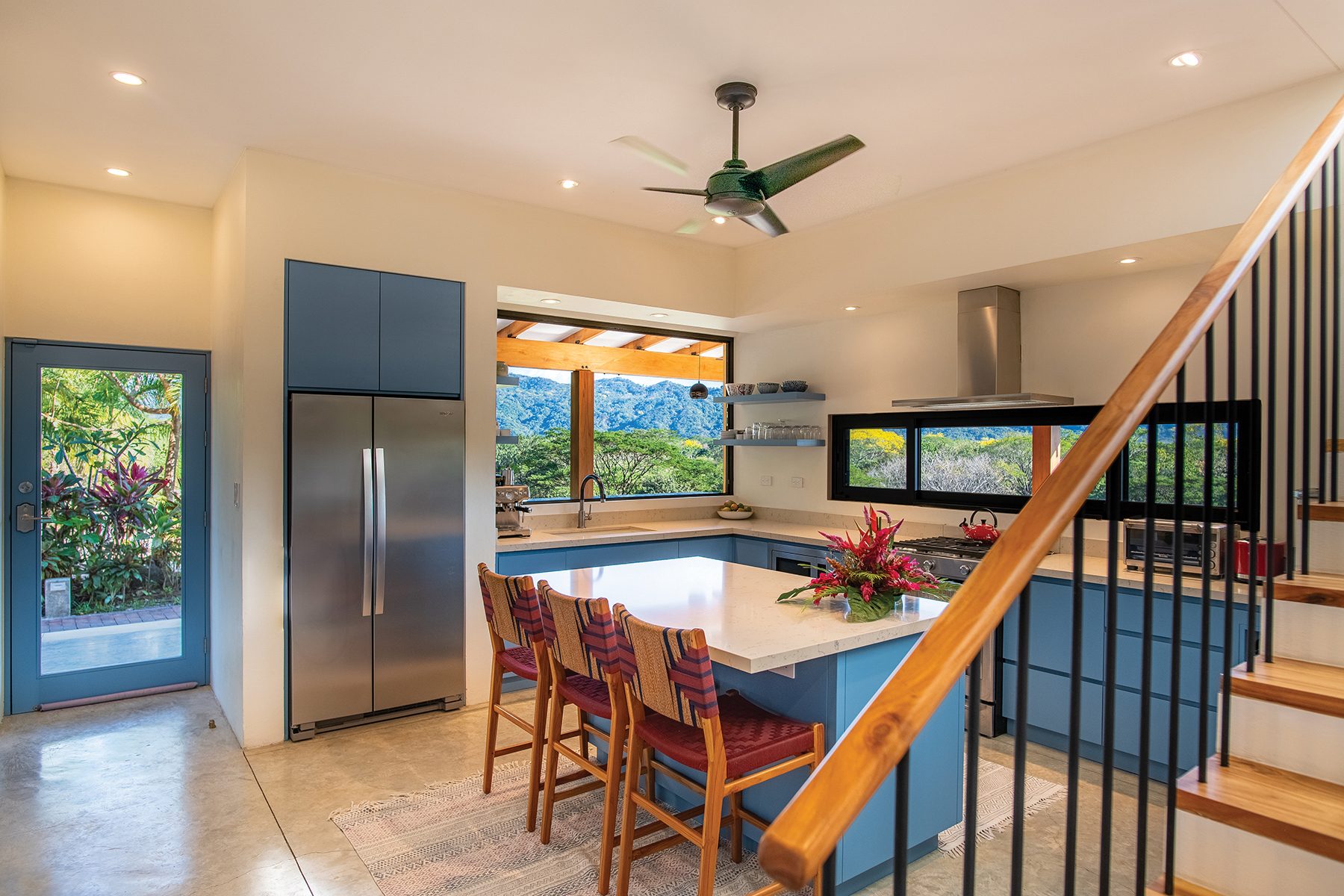
Solar, water and internet: how the estate runs
Infrastructure is the quiet dealbreaker on remote property. Power, water and connectivity at a 16.3-acre estate in Nosara, and what to verify anywhere else.