How a landowner creates a private wildlife refuge
Costa Rica’s Wildlife Conservation Law recognises three kinds of national wildlife refuge: state, mixed, and private. A landowner can have their own property declared one, by executive decree, and land classified that way is exempted from territorial tax.
It is a genuine designation and a serious commitment. Most articles describe the first half and skip the second, so this covers both.
What does the designation actually give you?
A legal status, a tax exemption on the affected land, and a permanent public record that this piece of ground is meant to stay as it is.
For an owner whose motive is that the land survives them, that last part is the substance. A refuge declaration is published in La Gaceta, the official gazette. It is not a private intention; it is a matter of record.
What does it take away?
Control, and this is the part to weigh carefully.
Natural resources inside a refuge fall under the management of SINAC, the National System of Conservation Areas. Activities in private and mixed refuges require SINAC’s authorisation, subject to sustainability criteria and, where relevant, environmental impact assessment.
In practice that means future building, clearing and land-use change on the affected area become permissioned rather than discretionary. If you intend to develop part of a property, you would not place that part inside the refuge.
Does refuge status protect against expropriation?
No — and the opposite is closer to the truth.
The law allows the executive to establish a refuge on private land with the owner’s authorisation, and provides that where the owner objects, expropriation shall be decreed instead. Expropriation is the remedy against an unwilling owner, not a shield for a willing one. Nothing in the refuge provisions confers immunity.
You will see the opposite claim made online. It is wrong.
How long does it take?
Longer than the rules suggest. The governing regulation sets a short statutory deadline; practitioners report waits of two to three years in reality, against a backdrop of a conservation service managing more than 150 protected areas with constrained staff and budget.
Sources also disagree on the commitment period — figures of five, ten and twenty years appear, with renewal cycles. Anyone considering this should get the current terms from SINAC directly rather than from an article, this one included.
What is required to apply?
Preliminary studies — physiographic, biological, and socioeconomic — filed with SINAC, together with a management plan for the property. This is a professional exercise, not a form.
The Nosara Civic Association applied in September 2023 to convert 247 hectares of its holdings into the district’s first private refuge, phased from an initial 60 hectares. That application illustrates the scale and the timeline better than any general description.
Is a refuge the right instrument, or is an easement?
It depends on what you are protecting against.
A refuge is a public conservation status with a state regulator attached. An ecological easement is a private restriction recorded against your title, lighter to create, enforced by a neighbouring owner rather than by the state, and the instrument the Nosara corridor is built on.
Owners who want conservation without surrendering operational control generally reach for the easement. Owners who want the strongest public status accept the oversight that comes with a refuge.
The short version
Costa Rica’s Ley 7317 allows privately owned land to be declared a national wildlife refuge by executive decree, with an exemption from territorial tax on the affected land. In exchange, resources inside the refuge come under SINAC’s management and activities require its authorisation. Refuge status does not protect against expropriation. Applications require physiographic, biological and socioeconomic studies plus a management plan, and in practice take years.
The Sanctuary Estate is 16.3 acres of regenerated dry forest on the Nosara River, with every tree catalogued at gardens.thesanctuaryestate.com. See the property, or arrange a private viewing.
Related reading
From cattle to canopy: three Nicoya restorations
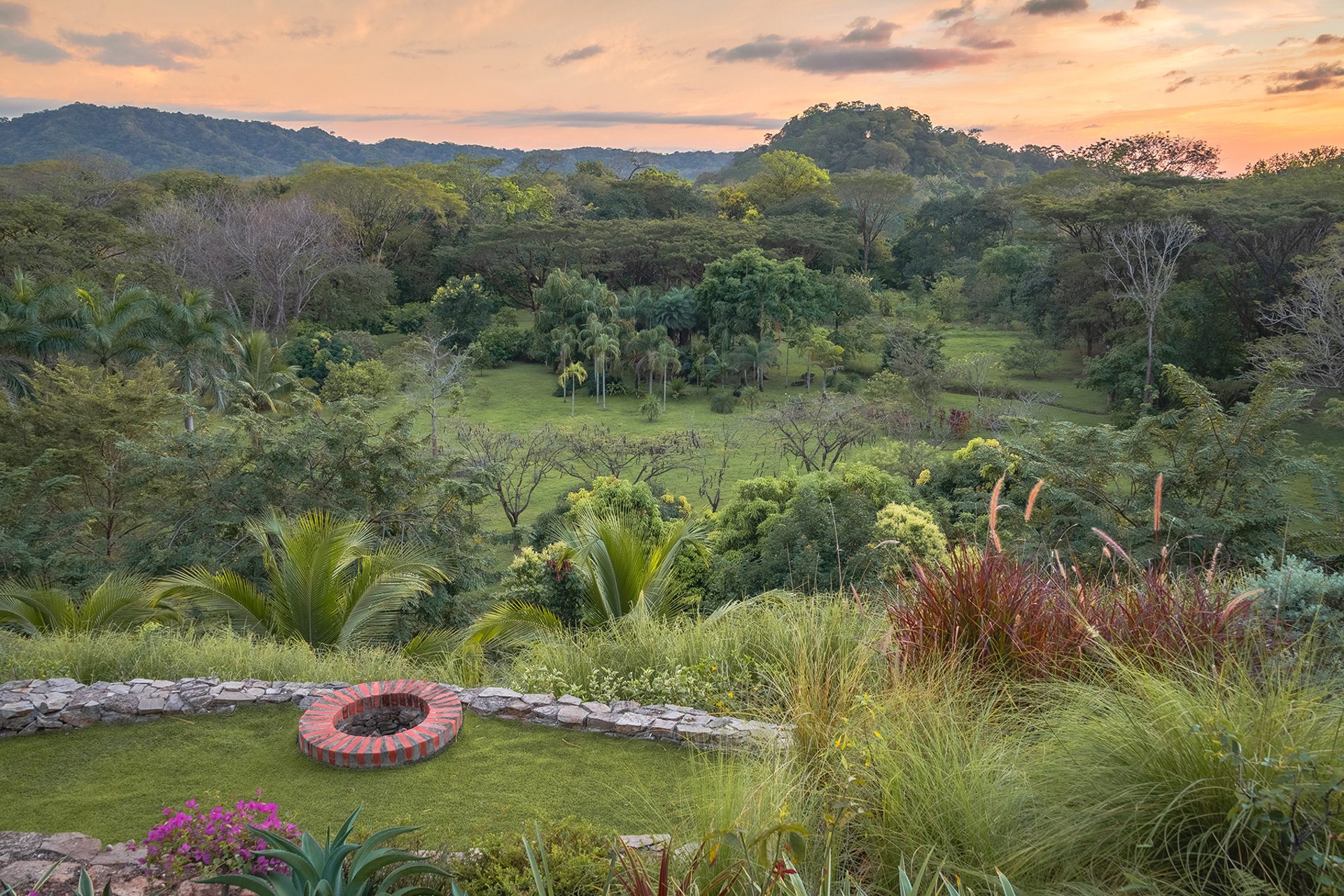
Degraded pasture becoming forest again on the Nicoya Peninsula — the Eden Project at Matambú, a private reserve on the Nosara River, and this estate.
What to check before buying land in Nosara
A due-diligence list for Guanacaste property: water, title, access, the maritime zone, setbacks and utilities — and what a straight answer looks like on each.