What is an ecological easement in Costa Rica?
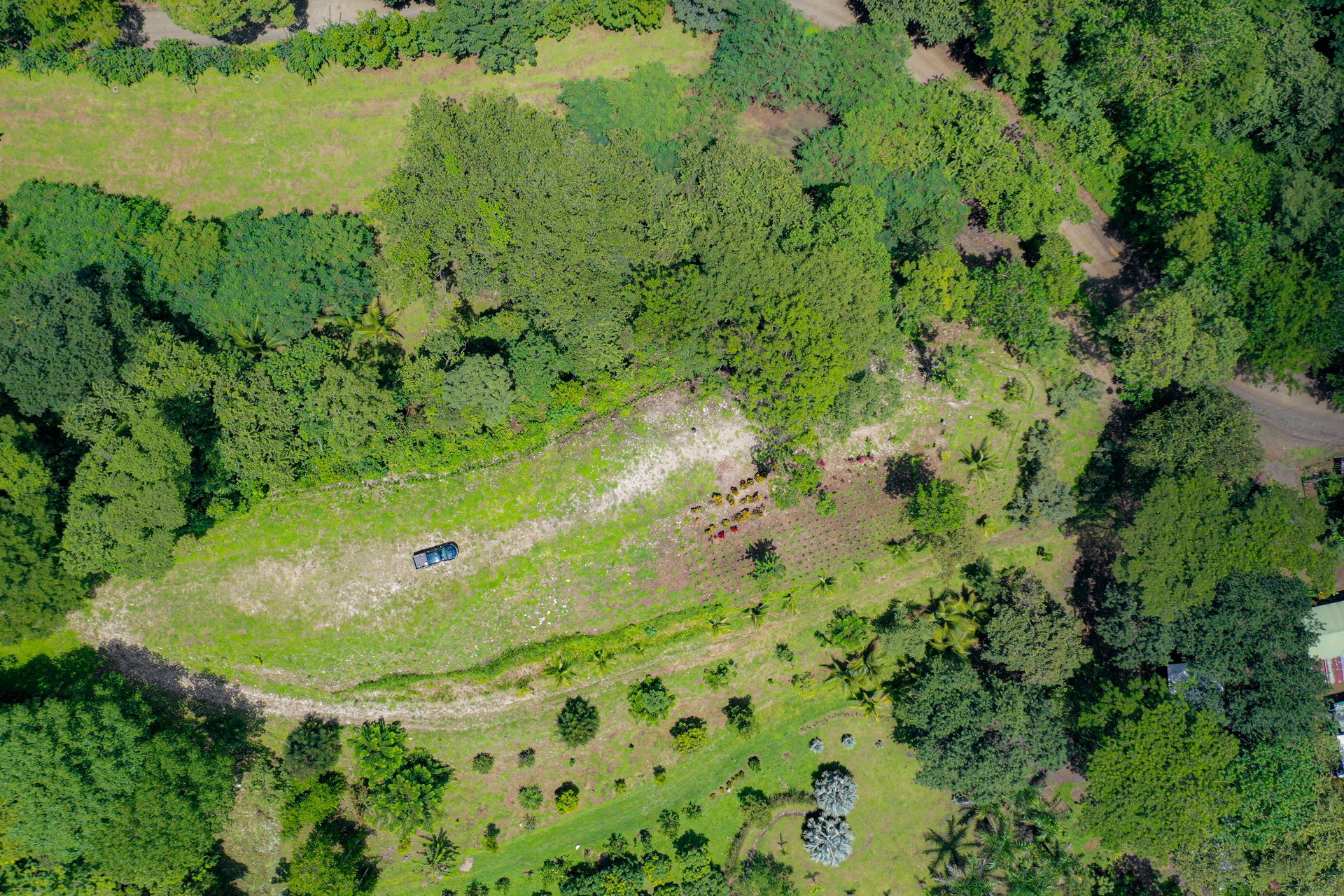
An ecological easement — servidumbre ecológica in Spanish — is a voluntary, registered restriction that a Costa Rican landowner places on their own property, dedicating part of it to conservation while keeping ownership. It is recorded in the National Registry against the title, which means it survives the sale of the land and binds whoever owns it next.
It is the instrument behind Nosara’s new biological corridor, so it is worth understanding properly — including the parts that are not settled.
How is it different from selling land to a conservation group?
You keep the land. You keep living on it, farming part of it, building on the parts you did not restrict.
An outright sale transfers everything. An easement carves out a specific commitment — do not clear this forest, do not build within this distance of the river — and leaves the rest of your rights intact. For an owner who wants their property protected but has no intention of leaving, it is the only mechanism that does the job.
Where does it come from in Costa Rican law?
There is no dedicated statute, which surprises people.
The easement is assembled from general civil law — Articles 305 and 373 of the Civil Code — plus Article 123 of the Biodiversity Law (No. 7788, 1998). The Centro de Derecho Ambiental y Recursos Naturales, CEDARENA, pioneered the instrument and established the first one in 1992. More than fifty were in place, covering over 5,500 hectares, by the time the national picture was last surveyed.
Who enforces it?
This is the important question, and the answer is more limited than it first appears.
The version that works in practice is appurtenant: it requires two properties. One is restricted, the other benefits, and the owner of the benefited property enforces the restriction through the civil courts. That structure also matters for permanence — appurtenant easements between neighbouring properties are the classification that can be held in perpetuity.
The alternative, an easement held by the State without a benefited property, exists in Article 123 but its implementing regulation was never issued. Twenty-six years on, it remains theoretical.
Has it been tested in court?
Barely. In the whole published Costa Rican case record there is essentially one appellate decision enforcing the conservation content of an ecological easement — Romanor R.M. S.A. v. Tuanis Guanacaste Limitada, 2024.
Costa Rica also lacks the supporting infrastructure that makes conservation easements durable elsewhere: the stewardship endowments, the monitoring, the legal defence funds that a mature land trust maintains. The Procuraduría has questioned whether the ordinary civil remedy is even adequate when a non-profit rather than a neighbouring owner holds the easement.
None of that makes the instrument useless. It does mean it should be presented as what it is — a real, registered, transferable commitment with a thin enforcement record — rather than as an American-style conservation easement transplanted whole.
Does it produce a tax deduction?
Not a United States one, and this needs saying plainly because the assumption is widespread.
A US federal charitable deduction for a conservation easement requires the recipient to be an organisation created in the United States, and requires the restriction to be perpetual and enforceable by that recipient. An easement granted to a Costa Rican association satisfies neither. There is no IRS ruling, no Tax Court decision and no authority approving such a deduction on foreign land.
Anyone told otherwise should ask to see the authority. Costa Rican tax treatment of protected and forested land is a separate question with its own genuine provisions, and one for a Costa Rican lawyer rather than a property website.
The short version
An ecological easement in Costa Rica is a voluntary conservation restriction recorded in the National Registry against a property’s title, so it survives sale. It has no dedicated statute, resting on the Civil Code and Article 123 of the Biodiversity Law; CEDARENA established the first in 1992. The workable form requires a neighbouring benefited property, which is also the only form reliably held in perpetuity. Enforcement is barely tested — one published appellate decision. It produces no US tax deduction.
The Sanctuary Estate holds 16.3 acres with river frontage and established forest in the Nosara valley, catalogued at gardens.thesanctuaryestate.com. To see it, arrange a private viewing.
Related reading
Buying land in Costa Rica to conserve it: what works
An honest guide to conserving Costa Rican land you own — the designations that exist, the ones that do not, and the tax assumption that is simply wrong.
Nosara, Tamarindo or Santa Teresa: choosing a coast
Three of Costa Rica's best-known Pacific towns, compared honestly: how you get there, what each is actually like to live in, and who each one suits.