Buying land in Costa Rica to conserve it: what works
If you want to buy land in Costa Rica and protect it, the mechanisms are real and the country has a genuine legal architecture for private conservation. But several things widely believed about it are not true, and one of them concerns tax. This is the honest version.
The short answer: you can create a private wildlife refuge, you can record a permanent ecological easement, and you can enrol qualifying forest in the state’s payment programme. You cannot get a United States tax deduction for any of it.
Can I create a protected area on my own land?
Yes. Costa Rica’s Wildlife Conservation Law recognises private national wildlife refuges alongside state and mixed ones, and provides an exemption from territorial tax on land classified that way.
It is a real designation with real consequences in both directions. Natural resources inside a refuge come under the management of SINAC, the national conservation system, and activities in a private refuge require its authorisation. That is a meaningful restriction on what you may later build or clear, and any honest account should say so rather than presenting refuge status purely as a benefit.
In practice, declaration takes considerably longer than the statutory timetable suggests. Plan in years, not months.
What about an easement instead?
An ecological easement — servidumbre ecológica — is the lighter instrument. You record a conservation restriction against your title in the National Registry, keep the land, and the restriction binds whoever owns it next.
It is the mechanism behind Nosara’s new biological corridor. It is also less battle-tested than its American equivalent: the workable form requires a neighbouring property to hold and enforce it, and there is essentially one published appellate decision enforcing one.
Does Costa Rica pay landowners to keep forest?
Yes, through FONAFIFO’s Payment for Environmental Services programme. Foreign owners are eligible, provided the property is properly registered.
Two things surprise people. The parcel-size minimums are low — one hectare for reforestation, two for forest protection or natural regeneration — so smaller properties qualify than most assume. And the payments are modest. Treat the programme as a credential and a discipline, not as income.
Two eligibility traps are worth knowing before you count on it. Reforestation contracts only recognise plantings established within about twelve months of signing, so a mature planting cannot be enrolled retrospectively. And the forest-protection category requires the land to meet the legal definition of bosque — a native ecosystem with better than 70% canopy and at least sixty trees per hectare over 15 cm diameter — which a planted mix of exotic and native species may not satisfy. That is a forestry regent’s field determination, not something to assume.
Can I claim a US tax deduction for conserving foreign land?
No, and this needs stating plainly because it is the single most common misconception.
A US federal conservation-easement deduction requires the restriction to be granted to an organisation created in the United States, and requires the conservation purpose to be protected in perpetuity and enforceable by that organisation. An easement granted to a Costa Rican association fails the first test outright. Costa Rican law struggles with the second.
There is no IRS ruling, no Tax Court decision and no professional guidance approving such a deduction on land outside the United States, and the IRS has been actively scrutinising international claims. Anyone who tells you otherwise should be asked to produce the authority.
Costa Rican tax treatment of forested and protected land is a separate question, with genuine provisions in the Forestry Law, and one for a Costa Rican lawyer.
So who actually does this?
Individuals, mostly. Not the large conservation organisations, whose budgets are measured in hectares protected per dollar and who therefore buy at a scale and price no residential property reaches.
The people who buy a piece of land in Costa Rica and protect it tend to be private owners and family foundations who want a particular place to survive. There are documented examples on this peninsula, and we have written about three of them.
The short version
To conserve land you own in Costa Rica: a private national wildlife refuge is a real designation carrying a territorial-tax exemption and SINAC oversight; an ecological easement records a permanent restriction against your title; and FONAFIFO’s PSA programme pays modestly for qualifying forest, with minimums of one to two hectares. A US conservation-easement tax deduction is not available on Costa Rican land.
The Sanctuary Estate is 16.3 acres of regenerated land on the Nosara River, catalogued tree by tree at gardens.thesanctuaryestate.com. See the property, or arrange a private viewing.
Related reading
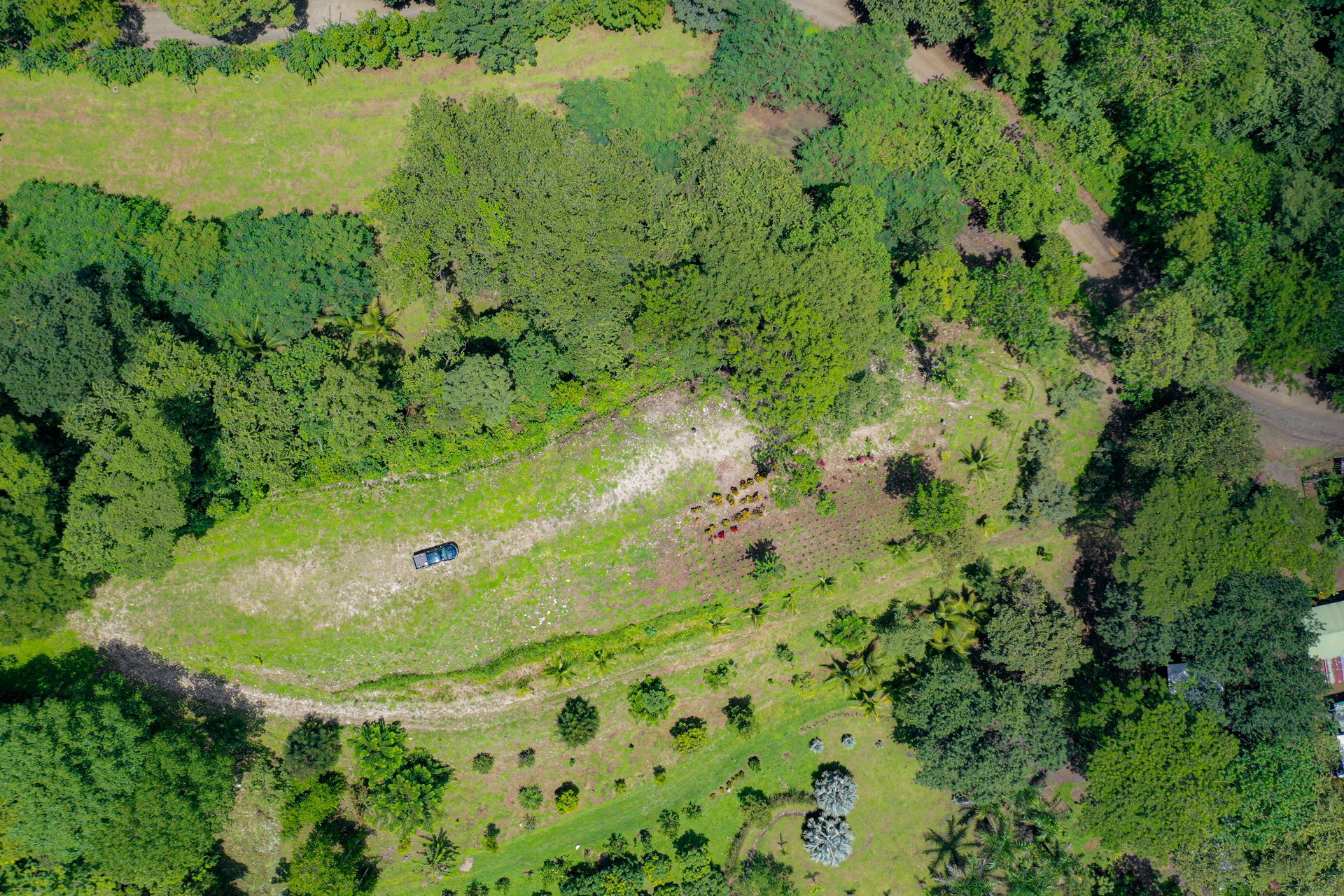
What is an ecological easement in Costa Rica?
A servidumbre ecológica lets a landowner protect part of their property permanently while keeping it. How it works, what it binds, and where it is still untested.
Nosara, Tamarindo or Santa Teresa: choosing a coast
Three of Costa Rica's best-known Pacific towns, compared honestly: how you get there, what each is actually like to live in, and who each one suits.