Guanacaste's first voluntary biological corridor, in Nosara
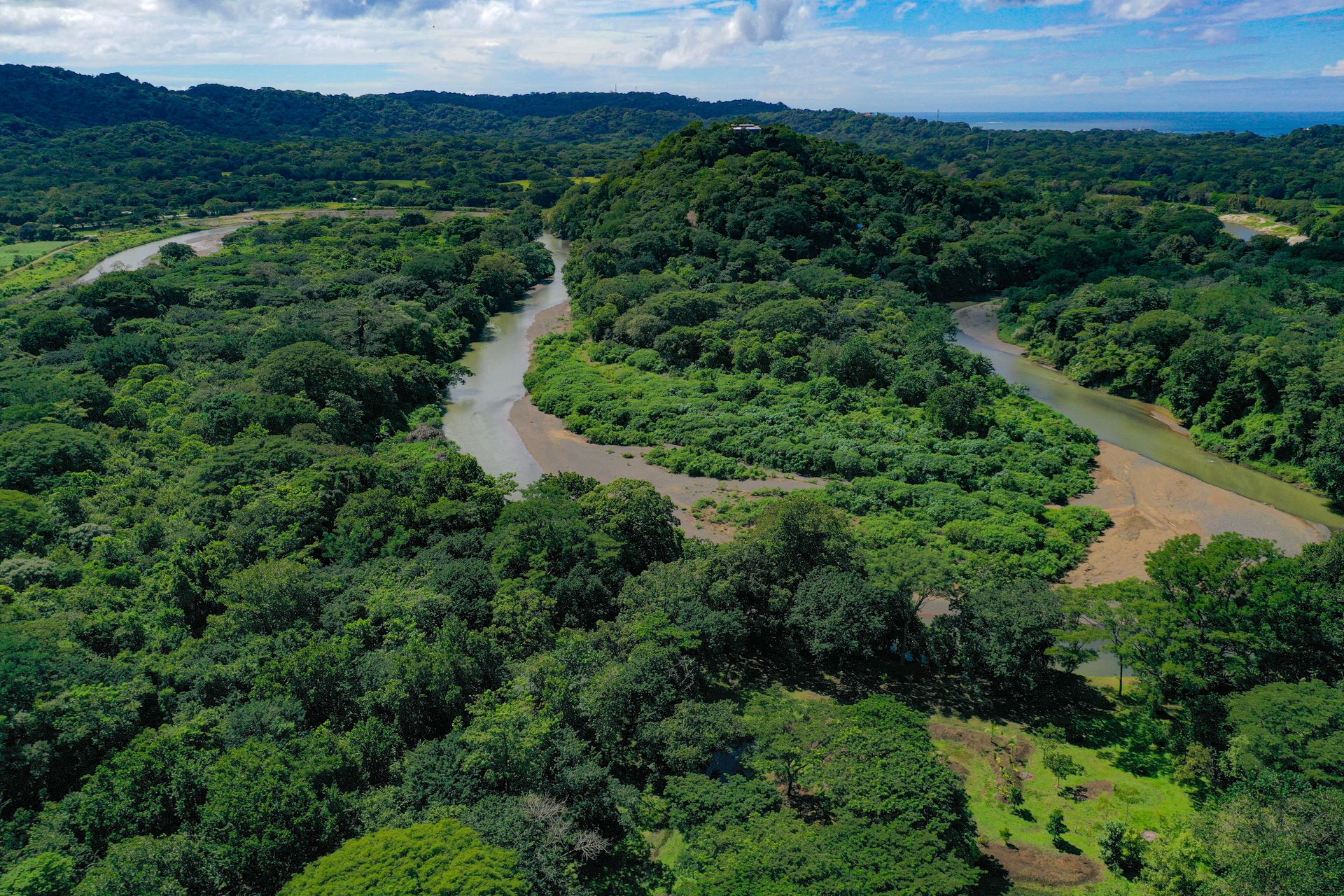
In early 2026, landowners around Nosara began assembling a biological corridor along the Nosara River — a connected run of protected habitat from the forested hills down to the Pacific. It is the first in Guanacaste built entirely on voluntary agreements between private owners, with no expropriation and no compulsory purchase behind it.
It is called the Corredor Biológico Río Nosara. Very little has been written about it in English, so here is what it is.
What is a biological corridor?
A strip of connected habitat that lets animals move between larger areas of forest.
Protected areas on their own tend to become islands. A troop of howler monkeys in one patch of forest cannot reach the troop in the next patch if a cleared valley sits between them, and over time isolated populations weaken. A corridor stitches the patches back together — not by turning everything into a park, but by keeping enough continuous cover for things to travel through.
Costa Rica runs a national programme of these. What is unusual here is the ownership.
Who is building it, and how?
The Nosara Civic Association coordinates it, working with SINAC — Costa Rica’s national conservation authority — under the regional corridors programme of the Área de Conservación Tempisque.
The instrument is the servidumbre ecológica, an ecological easement. A landowner dedicates part of their property to conservation, records the restriction in the National Registry, and keeps the land. The restriction stays attached to the title, so it survives the sale and binds whoever owns the property next.
As of March 2026 the association reported 264 hectares under protection, with the first completed easement covering 14 hectares of secondary forest along the Río Montaña in Santa Marta de Nosara.
Where does the corridor run?
Mountain to sea. It follows the river system down from Nosara’s highland forest toward the coast and the Ostional National Wildlife Refuge, the beach where olive ridley turtles arrive in mass nestings.
That is the shape of the ambition: an unbroken run of habitat from the hills to the place the turtles come ashore.
Why is Nosara doing this now?
Because Nosara still has something worth connecting, and because it is being built on quickly.
The district retains roughly 80% forest cover — high for a coastal town on this peninsula, and the reason the howler monkeys, the motmots and the black hawks are still ordinary sights here rather than rarities. Development is arriving. The corridor is an attempt to shape that rather than resist it. The association’s executive director, Marco Villegas, has put it plainly: real-estate expansion can be guided to coexist with nature.
Does the Sanctuary Estate sit inside the corridor?
We do not yet know, and we would rather say so than guess. Confirming a property’s position against the corridor’s mapped boundary is a question for SINAC’s Tempisque office or the Nosara Civic Association directly, and we are asking.
What is certain is the land itself. This estate holds extensive frontage on the Nosara River along its southern boundary, more than nine thousand trees and plants established over twelve years on ground that was cleared pasture in 2010, and forest cover that has drawn the wildlife back — 23 bird species and 19 animals recorded and photographed on the property, all catalogued in the tree register. Whatever the map says, that is habitat on a river in a valley that is trying to become continuous again.
The short version
The Corredor Biológico Río Nosara is Guanacaste’s first biological corridor built entirely on voluntary agreements between private landowners. Coordinated by the Nosara Civic Association with SINAC, it uses ecological easements recorded in the National Registry, ran to 264 hectares by March 2026, and connects Nosara’s highland forest to the Ostional National Wildlife Refuge on the coast.
To walk the river boundary and the gardens in person, arrange a private viewing.
Related reading
Can foreigners buy property in Costa Rica? A Nosara guide
Yes — foreigners can own titled land in Costa Rica with the same rights as citizens, no residency required. Here's how it works, and what it means for this Nosara estate.
Nosara's two seasons: dry, green, and when to come
Nosara has two seasons — a sunny dry season and a lush green season. Here's what each is like, and the best time to visit or live on this coast.