The butterflies of the Nosara river valley
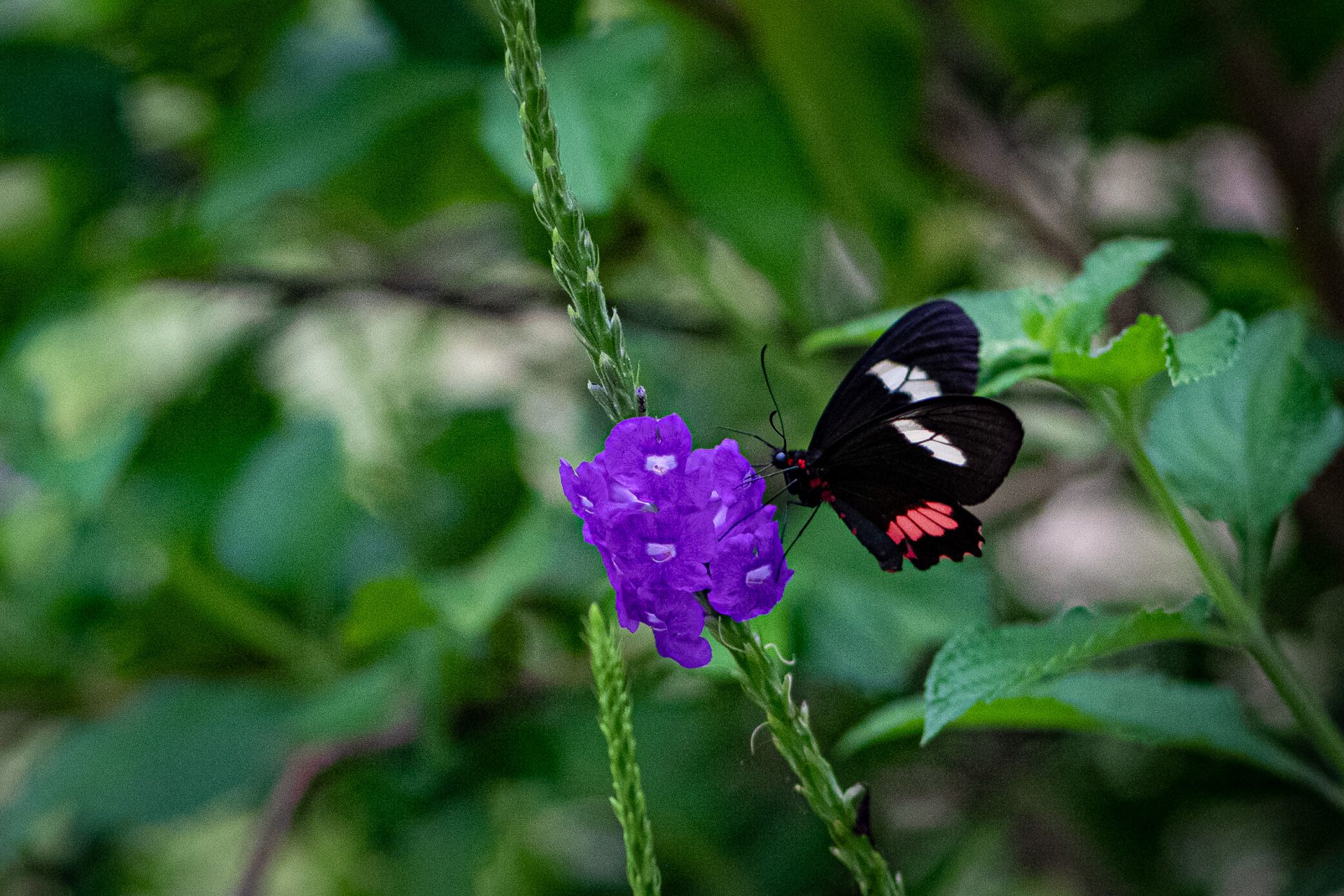
Seven butterfly species have been photographed and identified on this estate, and they are published in the wildlife guide alongside the animals. Butterflies are a better indicator of a garden’s health than almost anything else, because they need two separate things from it and will not stay if only one is present.
Which species are here?
- Red postman (Heliconius erato) — black wings crossed by a red band, a slow, floating flight, and an unusually long life for a butterfly.
- Gulf fritillary (Agraulis vanillae) — bright orange above, silver-spotted beneath.
- Long-tailed skipper — brown with an iridescent blue-green body and two long tails.
- Cattleheart (Parides sp.) — dark with red and white markings.
- Cloudless sulphur and white-angled sulphur (Anteos) — the yellows and whites that cross open ground in a straight line.
- A tarantula hawk wasp (Pepsis sp.), which is not a butterfly but is included because it is spectacular and people ask.
Some of those identifications are given at genus level, and the guide says so. A photograph of a sulphur in flight does not always resolve to a species, and we would rather publish that honestly than assert a name we cannot defend.
Why do butterflies need two things?
Nectar for the adults, and a host plant for the caterpillars — and they are almost never the same plant.
This is why a garden full of flowers can have very few butterflies. Adults will visit, feed and leave, because there is nowhere to lay. A garden that holds butterflies has both, which usually means it has some untidiness in it: the vines, the weeds and the scrubby edges that caterpillars actually eat.
The red postman is the clearest case. Its caterpillars feed on passionflower vines, and Passiflora edulis grows on this estate — which is also the passion fruit in the orchard. The gulf fritillary uses passionflower too.
What are they feeding on?
Whatever is flowering, which in a garden of fifty-two flowering plants is something in most months. Lantana, zinnia, bougainvillea, pentas-type flowers and the flowering trees all pull them in.
The dry-season flowering trees produce the heaviest butterfly activity of the year.
When is the best time to see them?
Mid-morning, when the air has warmed and before the heat of the afternoon. Butterflies are ectothermic; they need sun on their wings before they can fly well, so the first hour after the dew burns off is the productive one.
The dry season, January to April, is the strongest period.
Will there be a butterflies page?
Once there are about ten confirmed species. Seven is enough for a chapter inside the wildlife guide, not yet enough for a guide of its own.
Several more have been seen and not photographed, including a blue morpho. That one is worth waiting for.
The short version
Seven butterfly species are recorded at The Sanctuary Estate in Nosara, Costa Rica: red postman (Heliconius erato), gulf fritillary, long-tailed skipper, a cattleheart (Parides sp.), cloudless sulphur and white-angled sulphur, plus a tarantula hawk wasp. They persist because the property provides both nectar and larval host plants — passionflower vines in particular. Best viewed mid-morning; strongest in the dry season, January to April.
See the gardens, or arrange a private viewing.
Related reading

A hotel, a retreat, or a home: three futures
Sixteen acres, a two-bedroom house and an established forest can go three very different directions. What each would require, and the honest constraints on each.
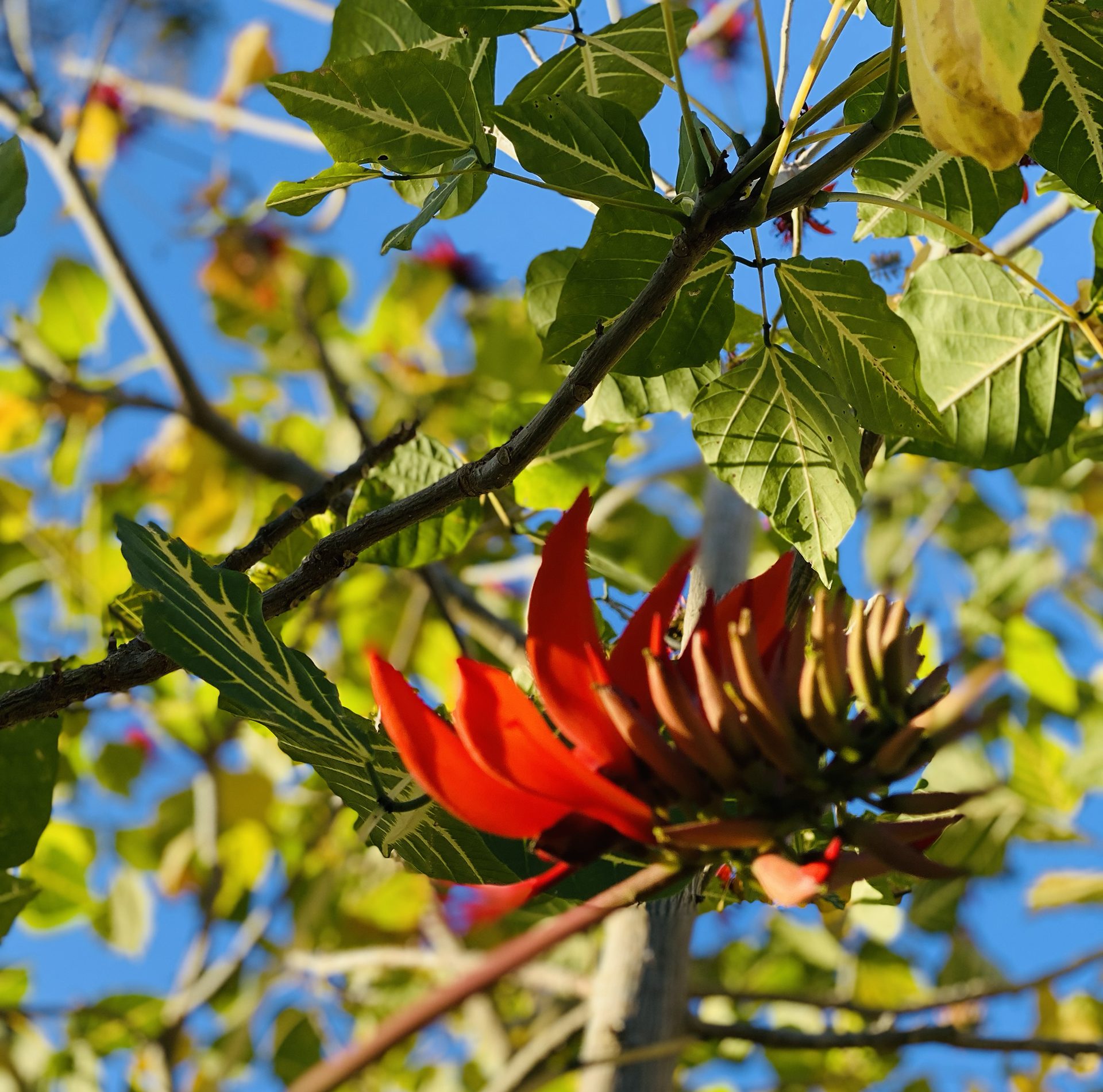
Where the trees came from
A baobab from Africa, a banyan from India, dry-forest natives from Guanacaste. How a collection of 202 species was assembled on one Costa Rican hillside.